TRP Channel
Transient receptor potential channels
TRP Channel (Transient receptor potential channel) is a group of ion channels located mostly on the plasma membrane of numerous human and animal cell types. There are about 28 TRP channels that share some structural similarity to each other. These are grouped into two broad groups: Group 1 includes TRPC ("C" for canonical), TRPV ("V" for vanilloid), TRPM ("M" for melastatin), TRPN, and TRPA. In group 2, there are TRPP ("P" for polycystic) and TRPML ("ML" for mucolipin). Many of these channels mediate a variety of sensations like the sensations of pain, hotness, warmth or coldness, different kinds of tastes, pressure, and vision. TRP channels are relatively non-selectively permeable to cations, including sodium, calcium and magnesium. TRP channels are initially discovered in trp-mutant strain of the fruit fly Drosophila. Later, TRP channels are found in vertebrates where they are ubiquitously expressed in many cell types and tissues. TRP channels are important for human health as mutations in at least four TRP channels underlie disease.
TRP Channel Isoform Specific Products
-
TRP Channel
(340)
View all products
-
TRPA1
(33)
View all products
-
TRPC3
(10)
View all products
-
TRPC4
(8)
View all products
-
TRPC5
(19)
View all products
-
TRPC6
(4)
View all products
-
TRPC7
(2)
View all products
-
TRPM8
(24)
View all products
-
TRPM2
(5)
View all products
-
TRPM3
(9)
View all products
-
TRPM4
(4)
View all products
-
TRPM7
(1)
View all products
-
TRPML1
(4)
View all products
-
TRPML2
(4)
View all products
-
TRPML3
(5)
View all products
-
TRPV1
(60)
View all products
-
TRPV2
(5)
View all products
-
TRPV3
(15)
View all products
-
TRPV4
(29)
View all products
-
TRPV6
(4)
View all products
All Product Categories
-
TRP Channel Inhibitors
(164)
View all products
-
TRP Channel Agonists
(116)
View all products
-
TRP Channel Antagonists
(147)
View all products
-
TRP Channel Activators
(85)
View all products
-
TRP Channel Modulators
(22)
View all products
-
TRP Channel Controls
(4)
View all products
-
TRP Channel Ligands
(2)
View all products
-
TRP Channel Related Products (574)
Related Products (574)

-
Antibodies (3)
-
TRP Channel Isoform Comparison
-
Adenosine 5′-diphosphoribose
 0 ImagesSynonyms: ADP ribose
-
IA-Alkyne
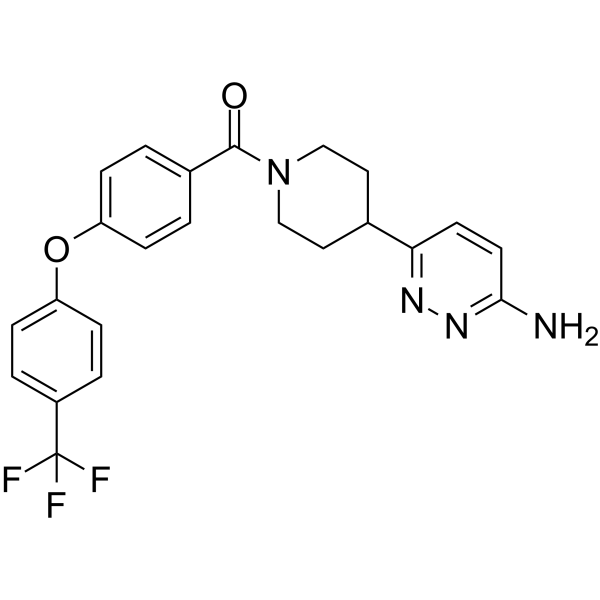
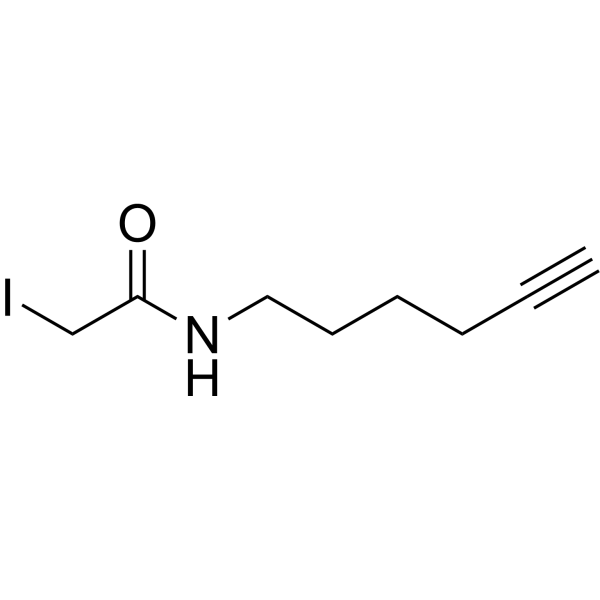 0 ImagesSynonyms: Iodoacetamide-alkyne; N-Hex-5-ynyl-2-iodo-acetamideIA-Alkyne (Iodoacetamide-alkyne; N-Hex-5-ynyl-2-iodo-acetamide) is a TRP channel (TRPC) agonist and has the potential for the study of respiratory infection. IA-Alkyne can be used to develop an isotopically tagged probe for quantitative cysteine-reactivity profiling. IA-Alkyne is a click chemistry reagent, it contains an Alkyne group and can undergo copper-catalyzed azide-alkyne cycloaddition (CuAAc) with molecules containing Azide groups.
-
SET2
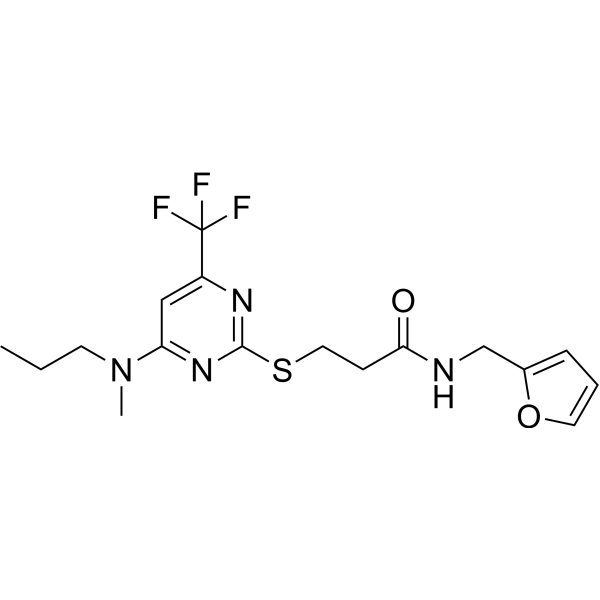 0 ImagesSET2 is a selective TRPV2 antagonist (IC50=0.46 μM). SET2 blocks the TRP channel and suppresses prostate cancer cells migration. SET2 reduces the lysophosphatidic acid (LPA, a TRPV2 activator)-induced cytoplasmic calcium increases.
-
Necrocide 1
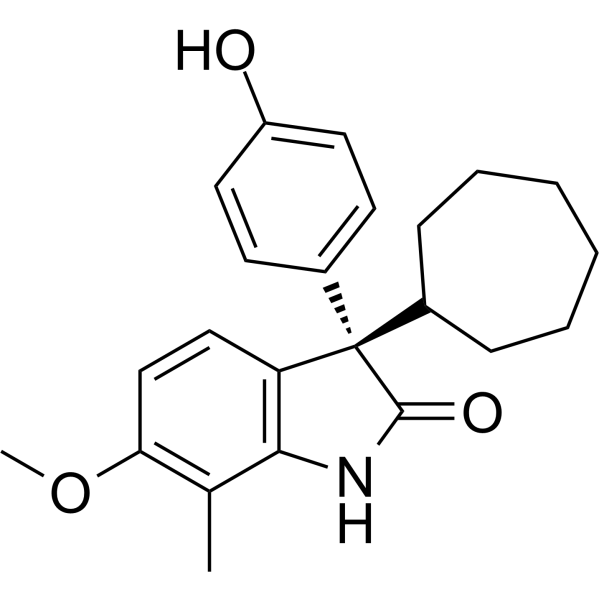 0 ImagesNecrocide 1, a necrosis by sodium overload (NECSO) inducer, is a selective transient receptor potential melastatin 4 (TRPM4) agonist with an EC50 of 306.3 nM for human TRPM4. Necrocide 1 triggers TRPM4-dependent necrotic cell death through the induction of sodium influx. Necrocide 1 induces hallmarks of immunogenic cell death incurring calreticulin (CALR) exposure, ATP secretion and high mobility group box 1 (HMGB1) release. Necrocide 1 can be used for the study of breast and prostate cancer.
-
Dihydrocapsaicin
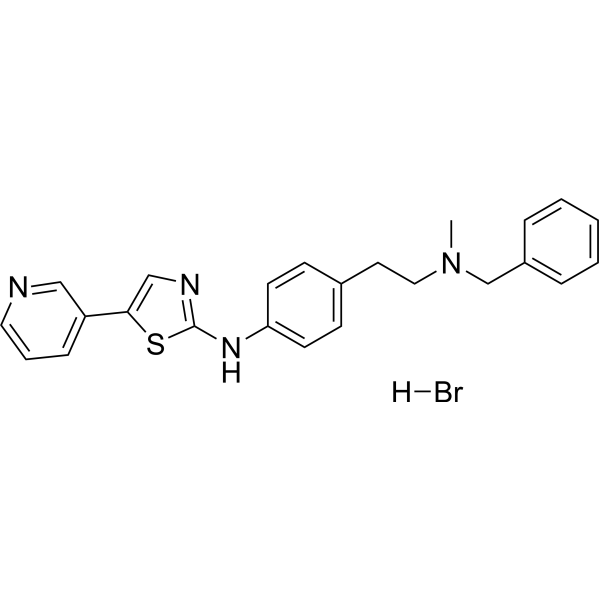
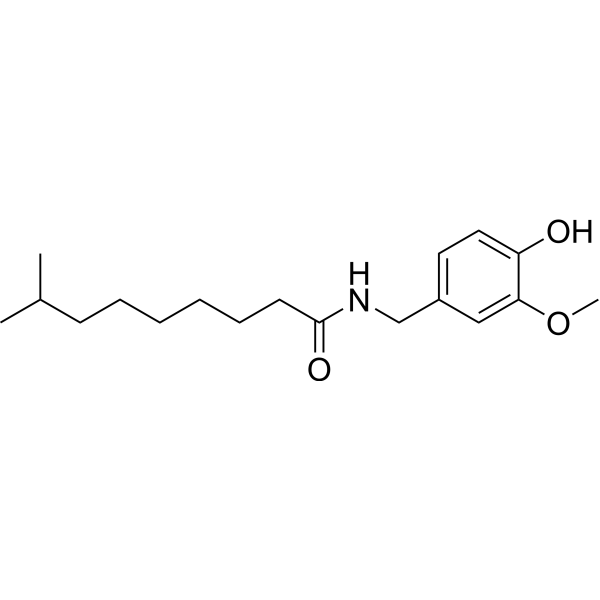 0 ImagesDihydrocapsaicin, a capsaicin, is a potent and selective TRPV1 (transient receptor potential vanilloid channel 1) agonist. Dihydrocapsaicin reduces AIF, Bax, and Caspase-3 expressions, and increased Bcl-2, Bcl-xL and p-Akt levels. Dihydrocapsaicin enhances the hypothermia-induced neuroprotection following ischemic stroke via PI3K/Akt regulation in rat.
-
(1R,2R)-ML-SI3
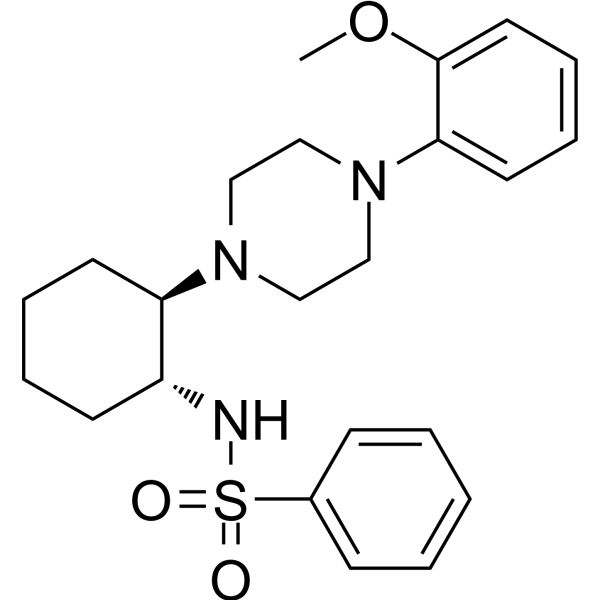 0 ImagesSynonyms: (-)-trans-ML-SI3
-
AMTB hydrochloride
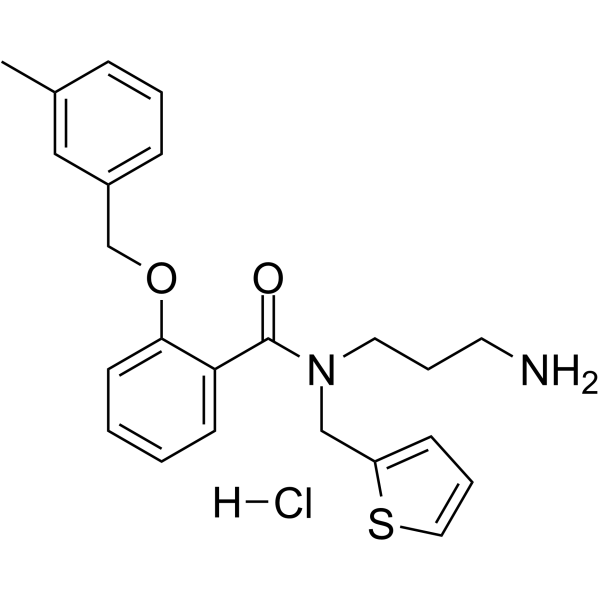 0 ImagesAMTB hydrochloride is a selective TRPM8 channel blocker. AMTB hydrochloride inhibits icilin-induced TRPM8 channel activation with a pIC50 of 6.23. AMTB hydrochloride can be used for the research of the overactive bladder and painful bladder syndrome. AMTB hydrochloride is a non-selective inhibitor of voltage-gated sodium channels (NaV).
-
Farnesyl pyrophosphate ammonium
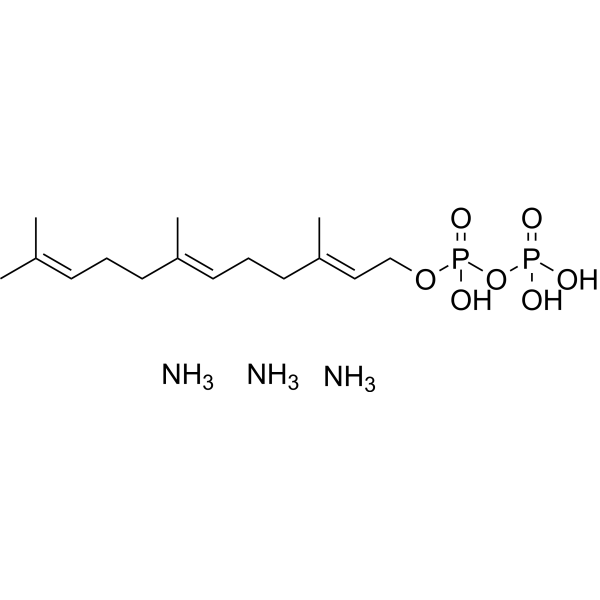 0 ImagesCat. No.: HY-113037CCAS No.: 116057-57-9Synonyms: Farnesyl diphosphate ammoniumFarnesyl pyrophosphate (Farnesyl diphosphate) ammonium is a metabolic intermediate in the mevalonate (MVA) pathway. It is a TRP channel (TRPM2) agonist that triggers Ca2+ influx and cell death. Farnesyl pyrophosphate ammonium is a key branch substrate for cholesterol synthesis, ubiquinone synthesis, protein farnesylation, and geranylgeranyl pyrophosphate (GGPP) synthesis. Farnesyl pyrophosphate ammonium is used in research on cerebral ischemia, neurodegenerative diseases, pancreatic cancer, inflammation, and autoimmune diseases.
-
JNJ-28583113
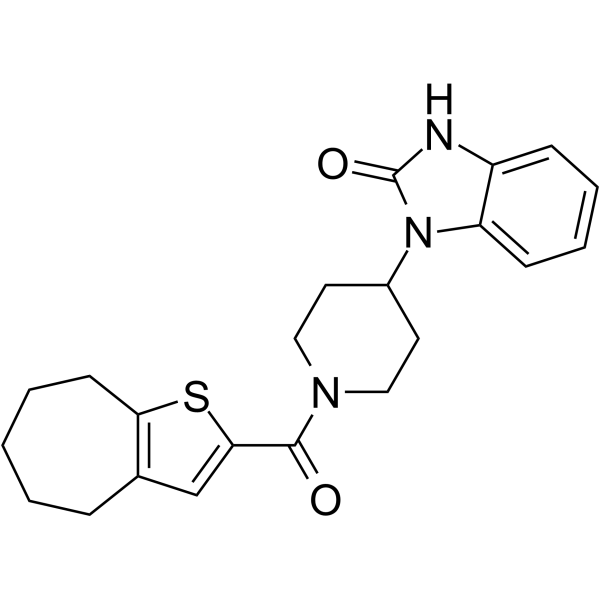
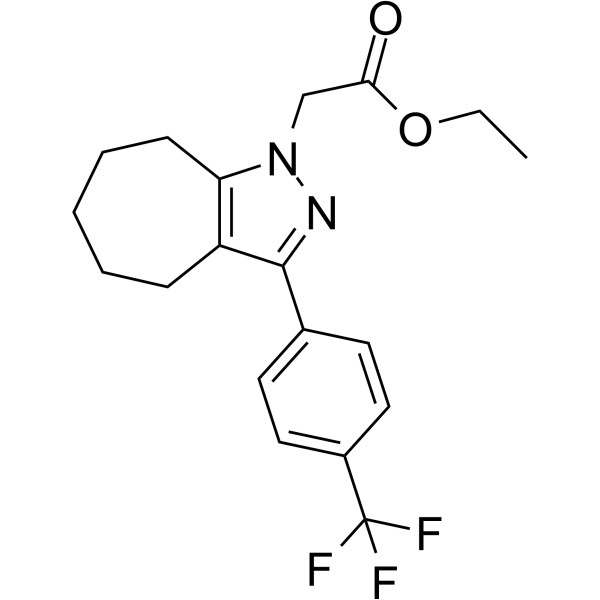 0 ImagesJNJ-28583113 is an TRPM2 antagonist with brain permeability. JNJ-28583113 inhibits TRPM2 blocked phosphorylation of GSK3α and β subunits. JNJ-28583113 protects cells from oxidative stress induced cell death. JNJ-28583113 also suppresses cytokine release in response to pro-inflammatory stimuli in microglia.
-
Zerencotrep
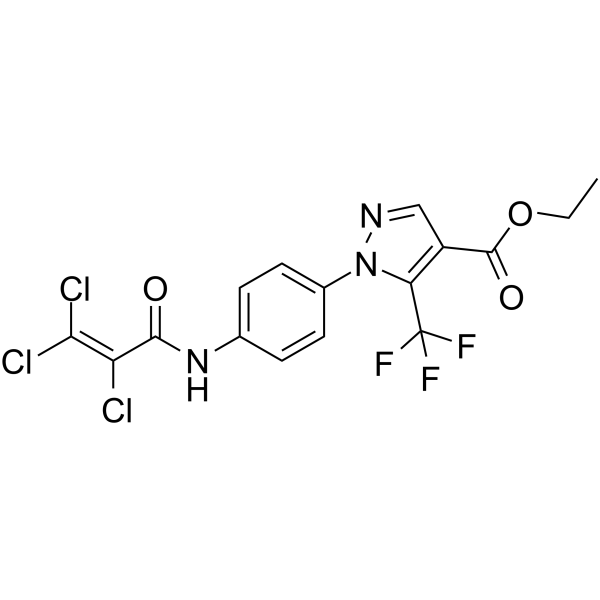
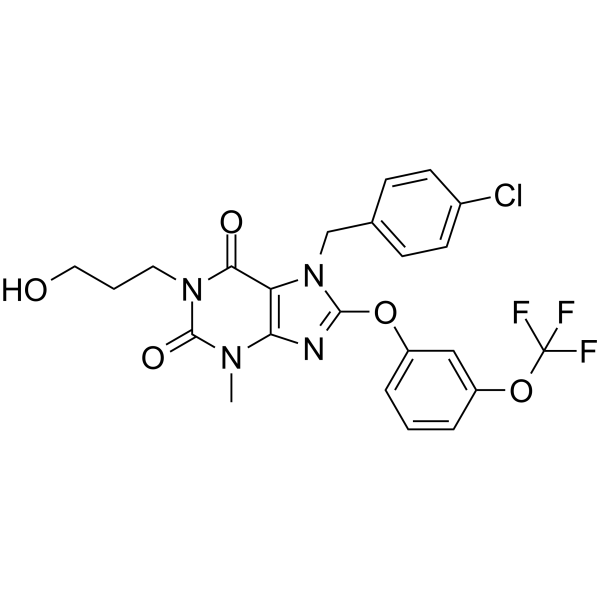 0 ImagesSynonyms: Pico145; HC-608
-
Primidone
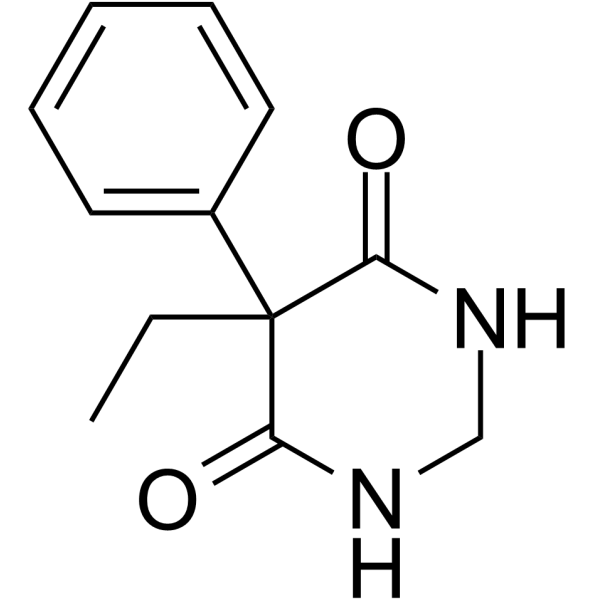 0 ImagesPrimidone is the orally active inhibitor for TRPM3 (IC50 = 0.6 μM), RIP kinase and voltage-gated sodium channel, and the antagonist for GABA receptor. Primidone can be used as the analgesic and anticonvulsant agent.
-
Hyperforin dicyclohexylammonium salt
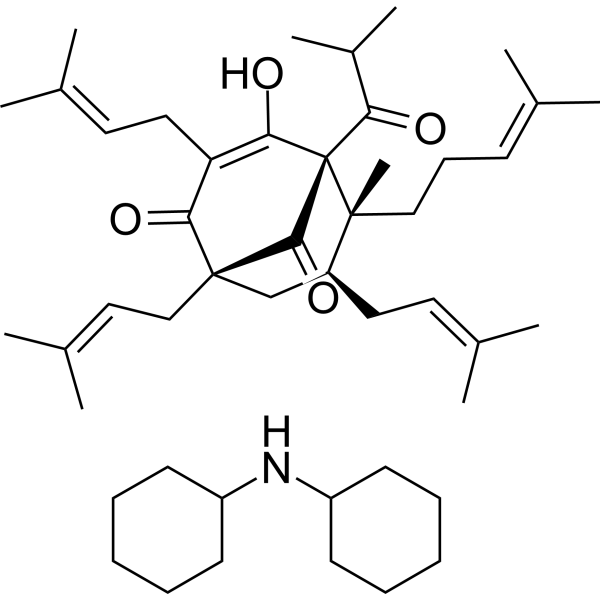 0 ImagesSynonyms: Hyperforin DCHAHyperforin dicyclohexylammonium salt (Hyperforin DCHA) is a transient receptor canonical 6 (TRPC6) channels activator. Hyperforin dicyclohexylammonium salt modulates Ca2+ levels by activating Ca2+-conducting non-selective canonical TRPC6 channels. Hyperforin dicyclohexylammonium salt also shows diverse pharmacological activities including anti-depression, anti-tumor, anti-dementia, anti-diabetes. Hyperforin dicyclohexylammonium salt modulates γδ T cells to secret IL-17α, improves Imiquimod (HY-B0180)-induced psoriasis-like mice model.
-
Acoltremon
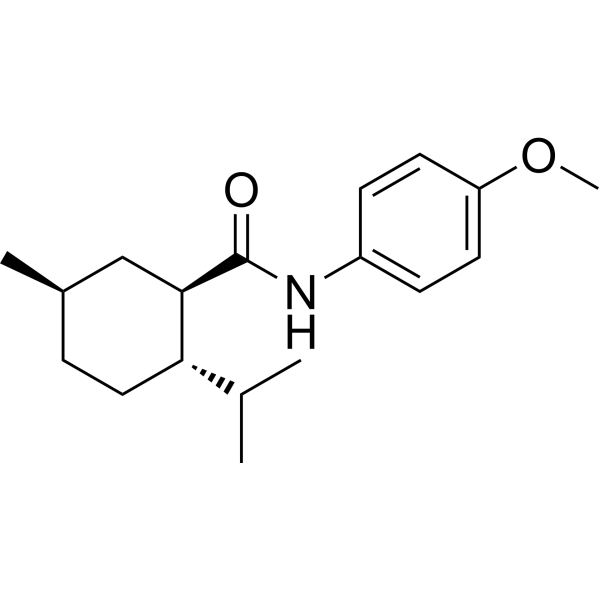 0 ImagesSynonyms: WS-12; AR-15512; AVX-012